Article Plan: Basic Hand Sewing Stitches PDF
This article details essential hand sewing techniques, offering a PDF guide to mastering basic stitches like running and back stitch.
It’s perfect for repairs and creative projects!
Hand sewing, a time-honored skill, offers a unique connection to the creation and repair of textiles. While modern sewing machines provide speed and efficiency, the art of hand sewing remains invaluable. It’s a portable, quiet, and often more precise method for certain tasks. This is especially true when dealing with delicate fabrics or intricate details.
Historically, hand sewing was the only way to construct garments and household items. Today, it complements machine sewing, allowing for personalized touches and quick fixes. Learning basic hand stitches empowers you to mend clothing, create handmade gifts, and even embark on larger sewing projects. Resources like a basic hand sewing stitches PDF guide can be incredibly helpful for beginners, providing visual instructions and step-by-step guidance.
The resurgence of interest in mindful crafts has also fueled a renewed appreciation for hand sewing. The rhythmic motion can be incredibly therapeutic, offering a break from the fast pace of modern life. It’s a skill that fosters creativity, resourcefulness, and a deeper understanding of the materials we use.
Why Learn Hand Sewing?
Learning hand sewing offers a multitude of benefits beyond simply repairing torn seams. In a world of fast fashion, knowing how to mend and alter your clothes extends their lifespan, reducing waste and saving money. A basic hand sewing stitches PDF provides the foundation for these essential skills.
Hand sewing is incredibly versatile. It’s ideal for projects where a machine is impractical – like attaching buttons, hemming delicate fabrics, or creating intricate embellishments. It’s also a portable skill; you can sew anywhere without needing electricity! Furthermore, it’s a fantastic way to personalize items, adding unique touches to clothing and home décor.
Beyond practicality, hand sewing promotes mindfulness and creativity. The repetitive motions can be calming and meditative. It allows for a slower, more deliberate approach to crafting, fostering a deeper connection to the process. It’s a skill everyone can enjoy, regardless of age or experience, and a PDF guide makes learning accessible to all.
Essential Tools for Hand Sewing
Embarking on hand sewing requires only a few fundamental tools, making it an accessible craft. A basic hand sewing stitches PDF will guide you through techniques, but first, you need the right equipment. Naturally, needles are paramount – a variety pack ensures you have the right size for different fabrics.
Thread is equally crucial; choose quality thread that complements your fabric’s color and weight. Sharp scissors are essential for precise fabric cutting. A thimble protects your finger while pushing the needle through tougher materials. Pins securely hold fabric layers together before sewing.
A seam ripper is invaluable for correcting mistakes. A measuring tape and ruler aid in accurate measurements. Finally, a needle threader simplifies the threading process, especially for those with limited dexterity. These tools, combined with a comprehensive PDF guide, will set you up for successful hand sewing projects.
Understanding Sewing Needles
Selecting the correct sewing needle is vital for successful hand sewing, and a basic hand sewing stitches PDF often includes a section on this. Needles aren’t one-size-fits-all; they vary in size and point type. Size is indicated by a number – higher numbers denote thicker needles for heavier fabrics like denim or leather.
Needle points also differ. Sharp points are ideal for woven fabrics, creating clean holes. Ballpoint needles, with rounded tips, are designed for knit fabrics, preventing snagging. Universal needles work well with many fabrics, offering versatility.
Furthermore, the eye of the needle impacts threading ease. Larger eyes accommodate thicker threads. Understanding these nuances, as detailed in your PDF guide, ensures smooth stitching and prevents fabric damage. A variety pack allows you to tackle diverse projects confidently, enhancing your hand sewing experience.
Choosing the Right Thread
Selecting the appropriate thread is crucial, complementing your needle choice as outlined in a comprehensive basic hand sewing stitches PDF. Thread weight impacts the stitch’s appearance and strength; heavier threads are suited for durable repairs or decorative stitching, while finer threads blend seamlessly for delicate fabrics.
Thread composition also matters. Cotton thread is excellent for cotton fabrics, offering a natural feel. Polyester thread is stronger and more elastic, ideal for synthetics and projects needing durability. Silk thread provides a luxurious sheen for finer work.
Consider color matching – a PDF guide often suggests thread colors that harmonize with your fabric. Always test the thread on a scrap piece to ensure compatibility and prevent puckering. Proper thread selection elevates your hand sewing, resulting in professional-looking results.
Basic Hand Sewing Stitches: An Overview
A basic hand sewing stitches PDF will typically introduce several foundational techniques. The running stitch, the simplest, creates a dashed line – perfect for basting or gathering. The back stitch, stronger and more secure, mimics machine stitching, ideal for seams. A whip stitch neatly finishes raw edges, preventing fraying, and is often used in appliqué.
The slip stitch is nearly invisible, making it perfect for hems and closing openings. These stitches, detailed in most PDF guides, form the basis for countless projects. Mastering these allows for repairs, alterations, and creative embellishments.
Understanding stitch length and spacing, as demonstrated in visual PDF guides, is key. Practice each stitch on scrap fabric before applying it to your project. Consistent practice builds confidence and skill.
Running Stitch
The running stitch, often the first stitch learned from a basic hand sewing stitches PDF, is characterized by its simple in-and-out motion. It creates a dashed line effect, with visible spaces between stitches. This makes it ideal for basting – temporarily holding fabric layers together – or for gathering fabric to create ruffles.
PDF guides emphasize keeping stitch length consistent for a neater appearance. While quick, it’s not the strongest stitch. For increased durability, stitches can be made smaller and closer together. Many PDFs include diagrams illustrating the correct needle and thread path.
It’s a versatile stitch, useful for simple embroidery or quick repairs. Mastering the running stitch provides a solid foundation for learning more complex techniques, as detailed in comprehensive PDF resources.
Back Stitch
The back stitch, frequently detailed in basic hand sewing stitches PDF guides, is renowned for its strength and durability, mimicking the look of machine stitching; It’s created by making a stitch forward, then bringing the needle back to the end of the previous stitch before advancing again. This overlapping creates a solid line.
PDF tutorials often highlight its use for seams, outlining how to maintain consistent stitch length and tension. Unlike the running stitch, the back stitch is robust enough for permanent seams. It’s a slower process, but the resulting strength is worth the effort.
Many PDFs demonstrate how to start and end the back stitch securely to prevent unraveling. It’s a fundamental stitch for repairs, alterations, and creating detailed embroidery designs, making it a cornerstone of hand sewing knowledge.
Whip Stitch
The whip stitch, commonly illustrated in basic hand sewing stitches PDF resources, is a simple yet versatile technique primarily used for joining edges together, or for finishing raw edges to prevent fraying. It involves bringing the needle over the edge of the fabric and then through both layers, creating a spiral-like appearance.
PDF guides emphasize its effectiveness in applications like attaching patches, binding fabric, or creating a neat edge on felt projects. The stitch is quick to learn and execute, making it ideal for beginners. However, it’s not as strong as a back stitch and is best suited for projects that don’t require heavy-duty seams.
Detailed PDF instructions often show how to adjust the stitch length and spacing to achieve different looks and levels of security. Mastering the whip stitch is a valuable skill for quick repairs and crafting projects.
Slip Stitch
The slip stitch, frequently detailed in basic hand sewing stitches PDF guides, is a nearly invisible technique used for closing openings after stuffing, or for creating a hidden hem. It’s a fantastic method for achieving a professional finish where you don’t want the stitching to be seen.
PDF tutorials demonstrate how the needle is slipped inside the folded edge of the fabric, catching only a few threads at a time. This creates a subtle, secure closure. It’s particularly useful for appliqué, attaching linings, and hemming garments without visible stitching.
Many PDF resources highlight the importance of using a thread color that matches the fabric for maximum invisibility. While it takes a bit more patience than other stitches, the slip stitch delivers a clean, polished result. It’s a cornerstone of invisible mending techniques.
Advanced Hand Sewing Stitches
Moving beyond the basics, a comprehensive basic hand sewing stitches PDF will often include more intricate techniques. These advanced stitches elevate your projects, offering both decorative and functional benefits. Mastering these expands your repair and creative capabilities significantly.
PDF guides frequently showcase the blanket stitch, ideal for finishing raw edges and creating decorative borders. It’s a strong, visible stitch, often used on felt or flannel. The blind hem stitch, also detailed in many PDFs, allows for nearly invisible hemming, perfect for skirts and trousers.
These stitches require more practice, but the results are worth the effort. Learning these advanced techniques, often found within detailed PDF resources, transforms simple repairs into elegant solutions and unlocks new possibilities for handmade creations.
Blanket Stitch
The blanket stitch, frequently illustrated in a basic hand sewing stitches PDF, is a versatile technique primarily used for edging fabrics to prevent fraying; It creates a decorative and durable finish, commonly seen on blankets (hence the name!), felt projects, and appliqué work. A PDF guide will demonstrate how to create evenly spaced, upright stitches along the fabric edge.
This stitch involves bringing the needle up through the fabric, then looping the thread around the edge before inserting the needle back down a short distance away. Maintaining consistent stitch length and tension is key to a neat appearance. Many PDFs offer pictorial step-by-step instructions for beginners.
Beyond its practical function, the blanket stitch adds a charming, handcrafted aesthetic. It’s a fantastic stitch to learn for anyone wanting to add a personal touch to their sewing projects, as detailed in many free PDF resources.
Blind Hem Stitch
The blind hem stitch, often detailed in a basic hand sewing stitches PDF, is a nearly invisible technique used to create a hem that doesn’t show stitching on the right side of the fabric. This is ideal for skirts, trousers, and dresses where a clean, professional finish is desired. A comprehensive PDF guide will illustrate the precise folding and stitching process.
This stitch involves folding the hem allowance under and then taking a tiny, almost imperceptible stitch, catching only a few threads of the main fabric. The goal is to secure the hem without visible stitches. Many PDF tutorials emphasize the importance of using a matching thread color for maximum invisibility.
Mastering the blind hem stitch takes practice, but the results are worth the effort. Numerous free PDF resources provide detailed diagrams and instructions to help you achieve a flawless, professionally finished hem.
Finding a Basic Hand Sewing Stitches PDF Guide
Locating a reliable basic hand sewing stitches PDF guide is surprisingly easy in today’s digital age. A simple online search using keywords like “hand sewing stitches PDF,” “beginner sewing guide PDF,” or “hand stitches tutorial PDF” will yield numerous results. Websites offering free sewing patterns and tutorials often include downloadable PDF guides.
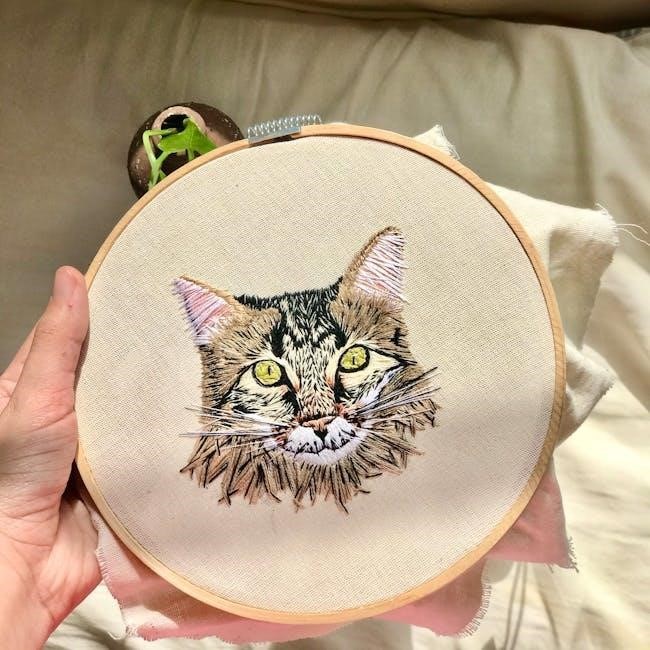
Several online platforms specialize in crafting resources and frequently host free PDFs covering essential sewing techniques. Look for guides from reputable sources to ensure accuracy and clarity. Many sewing blogs also offer downloadable PDFs as freebies to their readers.
Furthermore, websites like Pinterest can be excellent sources, linking to various PDF guides hosted on different blogs and websites. Remember to preview the PDF before downloading to confirm it covers the stitches you need to learn.
Using a PDF Guide Effectively
To maximize your learning from a basic hand sewing stitches PDF guide, begin by thoroughly reviewing the introductory sections. Pay close attention to diagrams illustrating each stitch; visual learning is crucial. Practice each stitch slowly and deliberately, referencing the PDF frequently. Don’t hesitate to pause and rewind – or re-read – sections as needed.
Print the PDF for easy access while sewing, allowing you to avoid constantly switching between devices. Highlight or annotate important steps and tips directly on the printed pages. Consider supplementing the PDF with video tutorials; seeing the stitches demonstrated can enhance understanding.
Start with simpler stitches like the running stitch before progressing to more complex ones. Consistent practice is key to mastering these techniques. Use scrap fabric to experiment and build confidence before tackling actual projects.
Applications of Hand Sewing: Repairs & Alterations

A basic hand sewing stitches PDF equips you with invaluable skills for clothing maintenance. Small tears, loose buttons, and frayed hems are easily addressed with techniques like the back stitch for durable repairs and the slip stitch for invisible mending. Extend the life of your garments and reduce textile waste!
Beyond repairs, hand sewing facilitates simple alterations. Adjusting a waistband, shortening a hem, or taking in a seam can be accomplished without professional tailoring. Mastering a blanket stitch allows for decorative edging and reinforcing fabric.
These skills aren’t limited to clothing; hand sewing is useful for repairing bags, upholstery, and even crafting. A PDF guide provides the foundation for self-sufficiency and creative customization, empowering you to mend, modify, and create with confidence.
Hand Sewing for Mindfulness and Creativity
Beyond practical repairs, a basic hand sewing stitches PDF unlocks a pathway to mindful creativity. The repetitive motion of stitches – running, back, or blanket – can be incredibly calming, offering a welcome respite from digital distractions. It’s a tactile, grounding activity.
Hand sewing encourages slow, deliberate work, fostering a sense of presence and focus. This mindful approach extends beyond the task itself, promoting relaxation and reducing stress. It’s a form of meditative art!
Furthermore, hand sewing fuels creative expression. From simple embellishments to intricate embroidery, the techniques learned from a PDF guide become tools for personalized artistry. Explore fabric painting, appliqué, and unique textile designs, transforming ordinary materials into cherished creations.
Resources for Further Learning
Expanding your hand sewing skills beyond a basic hand sewing stitches PDF is easily achievable. Numerous online platforms offer video tutorials demonstrating stitch techniques and project ideas. Websites dedicated to sewing and crafting frequently host free guides and patterns.
Consider exploring books like “Super Stitches Sewing” for a broader range of techniques. Local libraries often carry sewing manuals, providing access to detailed instructions and illustrations. Online communities and forums dedicated to hand sewing are invaluable for asking questions and sharing experiences.
Don’t overlook the wealth of information available on platforms like YouTube, where skilled sewists share their expertise. Many PDF guides are also available for purchase, offering specialized instruction on specific stitches or projects. Embrace continuous learning to refine your craft!
Troubleshooting Common Hand Sewing Issues
Even with a basic hand sewing stitches PDF guide, encountering challenges is normal. A frequent issue is thread knotting; ensure proper thread tension and avoid excessively long thread lengths. If your stitches are uneven, practice maintaining consistent stitch size and spacing.
Difficulty piercing fabric can be resolved by using the appropriate needle size for the fabric weight. A thimble can protect your finger and provide added pressure. For weak seams, reinforce with a backstitch or multiple rows of running stitch.
If fabric puckers, loosen your tension and avoid pulling the thread too tightly. Remember that patience is key! Refer back to your PDF guide for visual reminders of correct technique. Don’t be afraid to unpick and redo stitches – practice makes perfect!