Recovering leg function after a stroke demands dedicated exercise programs, often detailed in stroke exercises for legs PDFs.
These programs aim to rebuild strength and mobility.
Early rehabilitation focuses on seated exercises, progressing to standing and advanced movements, potentially aided by robotic exoskeletons.
Underwater treadmill therapy and tailored Tai Chi practices also show promise in enhancing balance and overall leg recovery.
Understanding the Impact of Stroke on Leg Function
Stroke frequently disrupts neural pathways controlling leg movement, leading to weakness, spasticity, or paralysis. This impacts gait, balance, and overall mobility, significantly affecting independence. Stroke exercises for legs PDFs often detail how damage to specific brain areas correlates with particular functional deficits.
Understanding these impacts is crucial for targeted rehabilitation. Initial impairments may include difficulty initiating movement, limited range of motion, and impaired coordination. Exercise programs, as outlined in these PDFs, aim to rewire neural connections and regain lost function, addressing both strength and control.
The severity varies greatly, necessitating individualized approaches.
The Importance of Targeted Leg Exercises
Targeted leg exercises, frequently detailed in stroke exercises for legs PDFs, are paramount for neuroplasticity – the brain’s ability to reorganize itself. Specific movements stimulate affected pathways, promoting recovery beyond simply regaining strength. These programs aren’t generic; they address individual deficits.
Progressive exercises, from seated marching to standing weight shifts, rebuild muscle memory and improve coordination. Utilizing assistive devices, like robotic exoskeletons, further enhances this process. Consistent, focused effort is key to maximizing functional gains and improving quality of life post-stroke.
PDF guides ensure proper form and progression.
Initial Assessment and Safety Considerations
Before starting stroke exercises for legs (as found in PDFs), a physical therapist’s assessment is crucial. Pre-exercise screening identifies limitations and ensures a safe, tailored program.
Prioritize safety and proper form to prevent injury during rehabilitation.
Consulting with a Physical Therapist
Engaging a qualified physical therapist is paramount before initiating any stroke exercises for legs, even those detailed in readily available PDFs. A therapist conducts a comprehensive evaluation, pinpointing specific impairments – weakness, spasticity, balance deficits – impacting leg function post-stroke.
They then craft a personalized rehabilitation plan, selecting appropriate exercises from resources like stroke exercises for legs PDFs, and modifying them to suit individual needs and capabilities.
This expert guidance ensures safety, maximizes effectiveness, and prevents potential complications, fostering optimal recovery and long-term mobility.
Pre-Exercise Screening and Warm-up
Prior to commencing any leg exercises – whether following a stroke exercises for legs PDF or a therapist’s guidance – a thorough screening is crucial; This assesses current health status, identifies potential contraindications, and ensures exercise safety.
A gentle warm-up, lasting 5-10 minutes, prepares muscles for activity. This includes light cardio, like seated marching, and dynamic stretches, such as ankle pumps and knee flexions.
Effective warm-ups enhance blood flow, improve joint mobility, and reduce the risk of injury during more strenuous rehabilitation exercises.
Seated Leg Exercises for Early Rehabilitation
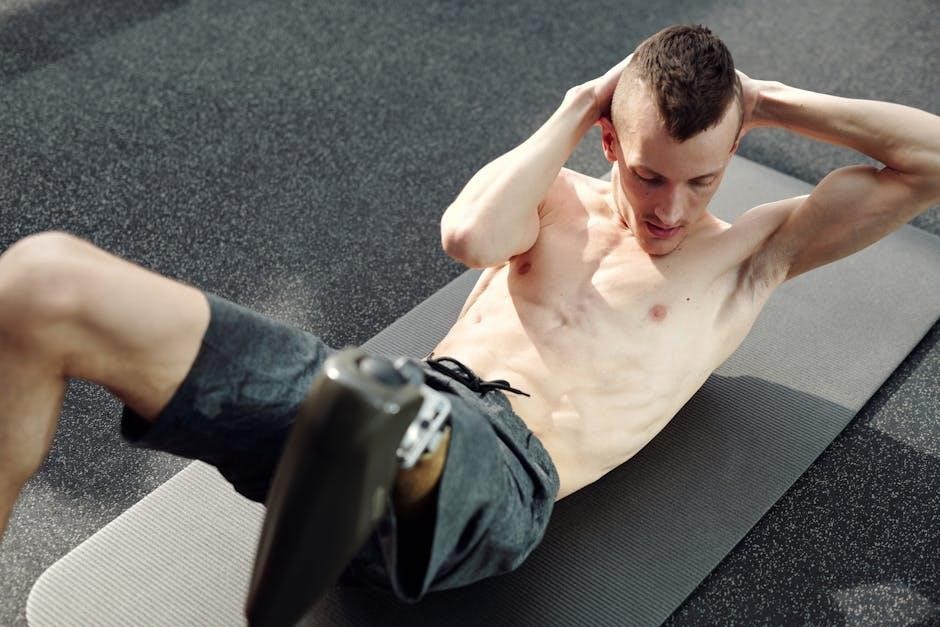
Initial leg rehabilitation, often outlined in stroke exercises for legs PDFs, begins with seated movements. Exercises like marching, ankle pumps, and knee extensions build foundational strength.
These gentle activities improve circulation and prepare the legs for more challenging exercises later in the recovery process.
Seated Marching Exercises
Seated marching is a fundamental leg exercise frequently detailed in stroke exercises for legs PDFs, ideal for early rehabilitation. Begin seated with your back supported and feet flat on the floor.
Lift one affected leg as if marching, bringing your knee towards your chest, then lower it slowly. Repeat with the other leg, alternating sides in a rhythmic motion.
Focus on controlled movements and maintain good posture. Start with 10-15 repetitions on each leg, gradually increasing the number as strength improves. This exercise enhances hip and knee flexion, crucial for regaining walking ability.
Ankle Pumps and Circles
Ankle pumps and circles are foundational leg exercises often found in stroke exercises for legs PDFs, promoting circulation and range of motion. Begin seated or lying down with your legs extended.
For ankle pumps, point your toes upwards towards your shin, then downwards away from your shin, repeating this motion rhythmically. Follow with ankle circles – rotate your ankles clockwise, then counter-clockwise.
Perform 15-20 repetitions of each exercise. These simple movements help prevent blood clots and maintain joint flexibility, vital components of post-stroke recovery.
Knee Extensions and Flexions
Knee extensions and flexions are crucial leg exercises detailed in many stroke exercises for legs PDFs, targeting quadriceps and hamstring strength. Begin seated with your back supported and feet flat on the floor.
Slowly straighten your affected leg, extending your knee as much as comfortably possible, then slowly bend it back, flexing the knee. Focus on controlled movements, avoiding any pain.
Aim for 10-15 repetitions per leg, gradually increasing the range of motion as strength improves. These exercises enhance leg control and prepare for more complex movements.

Standing Leg Exercises for Intermediate Rehabilitation
Standing exercises, often found in stroke exercises for legs PDFs, build upon seated work. Supported weight shifting, heel/toe raises, and mini-squats improve strength.
These movements enhance balance and prepare the legs for functional activities, requiring consistent practice and appropriate support.
Supported Weight Shifting
Supported weight shifting, detailed in many stroke exercises for legs PDFs, is a crucial intermediate step. Begin by standing with support – a table or therapist’s assistance is ideal.
Slowly shift your weight from one leg to the other, maintaining balance. Focus on feeling the weight transfer and engaging core muscles. This exercise improves stability and proprioception.
Gradually reduce support as strength increases. Aim for controlled movements, avoiding sudden shifts. Repeat 10-15 times on each side, building endurance and confidence. Proper form is paramount to prevent falls.
This exercise prepares the legs for more dynamic activities.
Heel Raises and Toe Raises
Heel raises and toe raises, commonly found in stroke exercises for legs PDFs, are excellent for calf muscle strengthening. Begin by standing with support, ensuring a stable base.
For heel raises, slowly lift your heels off the ground, rising onto your toes. Hold briefly, then lower. For toe raises, lift your toes, balancing on your heels.
Perform 10-15 repetitions of each, focusing on controlled movements. Progress by increasing repetitions or adding light ankle weights. These exercises improve ankle strength and balance.
Remember to maintain good posture throughout, and stop if you experience pain.
Mini Squats with Support
Mini squats with support, detailed in many stroke exercises for legs PDFs, build quadriceps and glute strength. Stand facing a sturdy chair or counter for balance.
Feet should be shoulder-width apart. Slowly bend your knees, lowering your hips as if sitting in a chair, but only go down a few inches – a ‘mini’ squat.
Keep your back straight and core engaged. Push through your heels to return to a standing position. Repeat 10-15 times.
Gradually increase the depth of the squat as strength improves, always prioritizing controlled movement and safety.
Advanced Leg Exercises for Strengthening
Stroke exercises for legs PDFs often include challenging movements like standing leg raises and progressive calf raises.
Lunges with support further enhance strength and stability, building towards independent mobility and functional recovery.
Standing Leg Raises (Forward, Side, Backward)
Stroke exercises for legs PDFs frequently detail standing leg raises as a crucial strengthening component. Begin with stable support, like a chair or counter. Slowly lift your affected leg forward, maintaining a straight knee, then lower it with control.
Repeat this motion, then progress to side leg raises, focusing on hip abduction. Finally, practice backward leg raises, engaging glutes.
These exercises improve hip and knee stability, crucial for walking. Start with 10-15 repetitions per direction, gradually increasing as strength improves. Proper form is paramount to prevent injury.
Calf Raises (Progressive Difficulty)
Stroke exercises for legs PDFs often include calf raises to rebuild ankle and lower leg strength. Begin by holding onto a stable surface for balance. Slowly rise up onto your toes, lifting your heels off the ground, then lower back down with control.
To increase difficulty, progress from two-leg raises to single-leg raises, maintaining balance. Adding a slight weight or performing the exercise on a slightly elevated surface further challenges the calf muscles.
Aim for 15-20 repetitions, focusing on a full range of motion. This exercise improves ankle stability and prepares for more complex movements.
Lunges with Support
Stroke exercises for legs PDFs frequently incorporate lunges, but with crucial modifications for safety. Begin by standing near a sturdy chair or wall for support. Step forward with one leg, lowering your body until both knees are bent at approximately 90 degrees.
Ensure your front knee stays aligned over your ankle, and your back knee doesn’t touch the floor. Push off with your front foot to return to the starting position.
Perform 10-12 repetitions per leg, prioritizing controlled movements and maintaining balance throughout the exercise.
Balance and Coordination Exercises
Stroke exercises for legs PDFs emphasize balance drills like single-leg stance and tandem walking, improving stability.
Weight shifting exercises further enhance coordination, crucial for regaining functional mobility post-stroke.
Single Leg Stance (with Support)
Single leg stance, detailed in many stroke exercises for legs PDFs, is a foundational exercise for improving balance and strengthening supporting muscles. Begin by standing near a sturdy surface – a counter or chair – for support.
Slowly lift one foot off the ground, maintaining your balance on the affected leg. Hold this position for as long as comfortably possible, aiming for 10-30 seconds. Repeat several times on each leg.
Focus on keeping your core engaged and your gaze fixed on a point ahead. As balance improves, gradually reduce reliance on support, and challenge yourself with slight head movements.
Tandem Stance (Heel-to-Toe)
The tandem stance, frequently outlined in stroke exercises for legs PDFs, significantly challenges balance by narrowing your base of support. Begin by standing with one foot directly in front of the other, heel touching the toes of the back foot – like walking on a tightrope.
Maintain this position, utilizing a chair or wall for support if needed. Hold for 10-30 seconds, then switch foot positions. Repeat several times on each side.
Focus on a fixed point to aid stability and engage your core. Progress by gradually reducing support and attempting the stance with eyes closed;
Weight Shifting Exercises
Weight shifting exercises, commonly detailed in stroke exercises for legs PDFs, improve balance and stability post-stroke. Stand with feet shoulder-width apart, holding onto a stable surface for support. Gently shift your weight from side to side, feeling the pressure change under your feet.
Then, practice shifting weight forward and backward. Maintain a slight bend in your knees throughout the movement. Aim for smooth, controlled shifts.
Gradually increase the range of motion and reduce reliance on support as your balance improves.
Utilizing Assistive Devices
Stroke exercises for legs PDFs often incorporate devices like robotic exoskeletons, balance trainers, and underwater treadmills to enhance leg rehabilitation.
These tools provide support, challenge, and facilitate improved gait and strength.
Robotic Exoskeleton Therapy
Robotic exoskeleton technology represents a cutting-edge approach to leg rehabilitation post-stroke, frequently detailed within stroke exercises for legs PDFs. These wearable devices offer powered assistance, enabling repetitive, task-specific movements that patients may struggle to perform independently.
Researchers are actively developing platforms to overcome limitations of traditional treadmills, particularly for stroke survivors with walking difficulties. Exoskeletons can improve gait symmetry, increase step length, and enhance muscle activation, promoting neuroplasticity and functional recovery.
They allow for intensive, customizable training, potentially accelerating progress and improving outcomes for individuals regaining leg function.
Balance Trainers and Support Aids
Balance trainers and various support aids play a crucial role in leg rehabilitation following a stroke, often outlined in comprehensive stroke exercises for legs PDFs. These tools provide a safe environment to challenge and improve stability, addressing a common deficit post-stroke.
Devices range from simple foam pads and wobble boards to more sophisticated computerized platforms. Support aids, like walkers or parallel bars, offer physical assistance during exercises, reducing fall risk and enabling greater participation.
Integrating these aids into a program enhances confidence and promotes functional independence.
Underwater Treadmill Therapy
Underwater treadmill therapy emerges as a beneficial component of leg rehabilitation post-stroke, frequently detailed within stroke exercises for legs PDFs. The buoyancy of water reduces stress on joints, facilitating easier movement and increased range of motion during walking exercises.
Studies indicate improved exercise performance metrics compared to conventional treadmill training. Water’s resistance provides a gentle strengthening effect, aiding muscle re-education and improving gait patterns.
This approach is particularly valuable for individuals with significant weakness or balance impairments.
Stretching Exercises for Leg Flexibility
Stroke exercises for legs PDFs emphasize stretching to improve flexibility, including hamstring, quadriceps, and calf stretches, performed seated or standing.
Regular stretching enhances range of motion and prevents stiffness, aiding overall leg function recovery.
Hamstring Stretches (Seated and Standing)
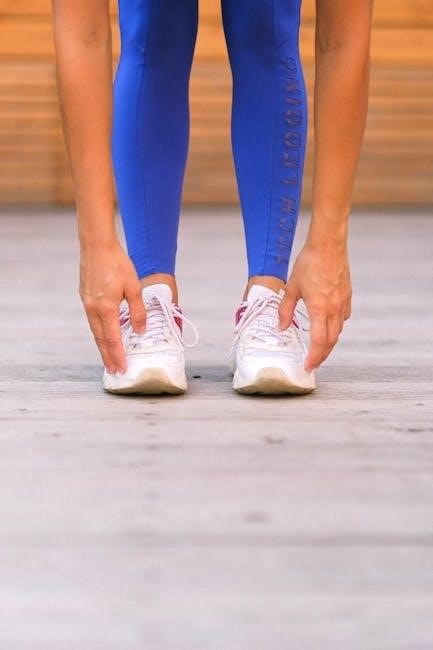
Hamstring stretches, detailed in stroke exercises for legs PDFs, are crucial for regaining flexibility post-stroke. Seated hamstring stretches involve sitting with legs extended and gently reaching towards toes.
Standing hamstring stretches can be performed by placing one leg slightly forward and bending at the hips, keeping the back straight.
These stretches improve leg range of motion, reduce stiffness, and enhance walking ability. Remember to hold each stretch for 20-30 seconds, avoiding any pain. Consistent practice is key for optimal results.
Utilize a towel or strap if reaching toes is difficult.
Quadriceps Stretches
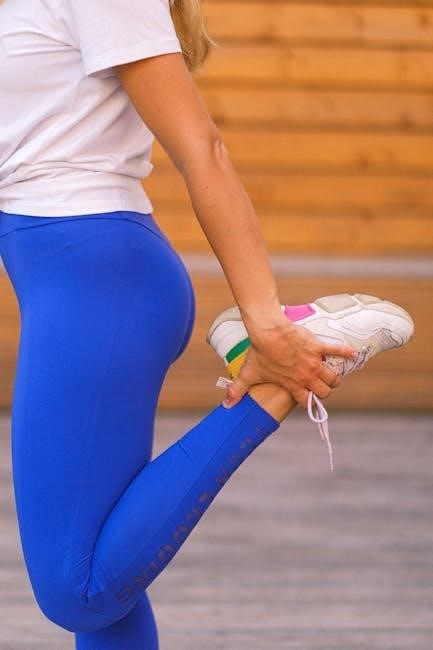
Quadriceps stretches, often outlined in stroke exercises for legs PDFs, are vital for restoring leg extension strength after a stroke. A common method involves standing and holding your foot towards your buttocks, feeling a stretch in the front of the thigh.
If balance is a concern, perform this stretch while seated, or use a chair for support.
Gentle stretching improves leg control and facilitates smoother gait patterns. Hold each stretch for 20-30 seconds, avoiding overextension or discomfort. Regular practice enhances flexibility and functional movement.
Consider using a strap to assist if needed.
Calf Stretches
Calf stretches, frequently detailed in stroke exercises for legs PDFs, are crucial for improving ankle flexibility and walking ability post-stroke. A simple stretch involves leaning against a wall with one leg extended back, heel firmly planted on the ground.
Bend the front knee, feeling the stretch in the calf of the extended leg.
Variations include bent-knee and straight-knee calf stretches to target different muscle fibers. Hold each stretch for 20-30 seconds, ensuring a gentle pull, not pain. Consistent practice aids in regaining a natural stride.
Use support if balance is compromised.
Exercise Programs and Rehabilitation Protocols
Stroke treatment sections within stroke exercises for legs PDFs emphasize tailored programs. Rehabilitation protocols adjust exercises based on individual needs and progress.
Consistent, progressive routines are key to regaining strength.
Stroke Treatment and Rehabilitation Sections
Stroke exercises for legs PDFs commonly structure treatment into phases, mirroring neurological recovery. Initial sections focus on regaining basic movement through seated exercises like ankle pumps and knee extensions.
Subsequent sections introduce standing exercises – supported weight shifting and mini squats – building strength and balance. Advanced phases incorporate leg raises and lunges.
Protocols emphasize progressive overload, gradually increasing resistance and complexity. Rehabilitation sections also detail assistive device integration, like robotic exoskeletons, and highlight the importance of consistent practice for optimal outcomes.
Tailoring Exercises to Individual Needs
Stroke exercises for legs PDFs rarely offer one-size-fits-all solutions; personalization is key. Initial assessments, guided by a physical therapist, determine baseline strength, range of motion, and balance.
Exercise selection adapts to the stroke’s severity and affected side. Individuals with limited mobility begin with seated movements, while those with more function progress faster.
PDFs often suggest modifications – reducing range, adding support – to ensure safety and prevent frustration. Consistent monitoring and adjustments, based on patient response, are crucial for maximizing recovery.
Monitoring Progress and Adjusting Exercises
Stroke exercises for legs PDFs emphasize tracking improvements in strength and mobility. Regular assessments guide exercise modifications, ensuring continued progress and preventing plateaus.
Patient feedback is vital; adjustments address pain or fatigue, optimizing the rehabilitation journey.
Tracking Improvements in Leg Strength and Mobility
Stroke exercises for legs PDFs often include charts to meticulously document progress. Key metrics involve measuring range of motion, observing walking speed, and quantifying leg strength using manual muscle testing.
Regularly noting the number of repetitions completed, the duration of exercises, and any perceived exertion levels provides valuable data. Observing improvements in balance, like holding a single leg stance longer, is also crucial.
Consistent tracking allows therapists and patients to visualize gains, fostering motivation and informing necessary adjustments to the rehabilitation plan. Photographic or video documentation can further illustrate progress.
Modifying Exercises Based on Patient Response
Stroke exercises for legs PDFs emphasize individualized plans; If an exercise causes pain or excessive fatigue, it should be immediately modified or stopped. Reducing repetitions, decreasing resistance, or simplifying the movement are common adjustments.
Conversely, if an exercise feels too easy, progression is key – increasing resistance, adding repetitions, or introducing more challenging variations. Observing the patient’s form and overall response is vital.
A therapist’s expertise ensures exercises remain challenging yet safe, maximizing recovery potential while preventing re-injury. Consistent communication between patient and therapist is paramount.
The Role of Tai Chi in Stroke Rehabilitation
Tai Chi, even in modified seated forms detailed in stroke exercises for legs PDFs, improves balance, mental health, and potentially arm/hand function post-stroke.
Its gentle movements enhance coordination and stability, aiding leg recovery and overall well-being.
Modified Tai Chi for Seated Stroke Survivors
Tai Chi adaptations for seated stroke survivors, often found within stroke exercises for legs PDFs, prioritize safety and accessibility. These programs modify traditional forms, focusing on gentle, flowing movements performed while seated, minimizing fall risk.
Emphasis is placed on weight shifting, controlled leg movements, and upper body coordination. These exercises improve circulation, range of motion, and muscle strength. The goal is to enhance balance and functional independence, promoting both physical and mental well-being.
Regular practice, guided by qualified instructors or resources, can significantly contribute to rehabilitation progress.
Benefits of Tai Chi for Balance and Mental Health
Integrating Tai Chi, as detailed in many stroke exercises for legs PDFs, offers dual benefits: improved physical balance and enhanced mental well-being. The slow, deliberate movements cultivate proprioception – awareness of body position – crucial for regaining stability post-stroke.
Furthermore, Tai Chi’s meditative aspects reduce stress, anxiety, and depression, common challenges for stroke survivors. Focused breathing and mindful movement promote relaxation and emotional regulation.
Studies demonstrate improved sitting balance and overall mental health outcomes with consistent practice, making it a valuable adjunct to traditional rehabilitation.

Long-Term Maintenance and Prevention
Stroke exercises for legs PDFs emphasize continued practice post-rehabilitation to sustain gains. Regular activity prevents functional decline and reduces future fall risk.
Maintaining leg strength and mobility is vital for independence and quality of life, promoting long-term wellness.
Continuing Leg Exercises After Rehabilitation
Post-stroke leg rehabilitation doesn’t conclude with formal therapy; sustained effort is crucial. Stroke exercises for legs PDFs often provide home programs for ongoing practice, reinforcing gains achieved during treatment.
These programs typically include a mix of strengthening, balance, and flexibility exercises, adapted to individual capabilities. Consistency is key – even short, regular sessions are more beneficial than infrequent, intense workouts.
Consider incorporating activities like walking, swimming, or cycling into your routine. Regularly reviewing and potentially modifying exercises, guided by a physical therapist, ensures continued progress and prevents plateaus. Prioritize safety and listen to your body.
Preventing Falls and Maintaining Mobility
Fall prevention is paramount post-stroke, and continued leg exercises, detailed in stroke exercises for legs PDFs, play a vital role. Strengthening exercises improve stability, while balance training enhances responsiveness to prevent stumbles.
Regularly practicing weight shifting and single-leg stance (with support) builds confidence and coordination. Home safety assessments are crucial – remove trip hazards and ensure adequate lighting.
Assistive devices, like canes or walkers, can provide additional support when needed. Maintaining an active lifestyle, coupled with consistent exercise, maximizes mobility and minimizes fall risk, fostering independence.
Resources and Further Information
Find qualified physical therapists specializing in stroke rehabilitation and access stroke exercises for legs PDFs online.
Connect with stroke support groups for shared experiences and guidance, enhancing your recovery journey and well-being.
Finding Qualified Physical Therapists
Locating a skilled physical therapist is crucial for effective stroke leg rehabilitation, often utilizing stroke exercises for legs PDFs as program guides.
Seek therapists certified in neurological rehabilitation, possessing experience with post-stroke care and gait training.
Resources like the American Physical Therapy Association (APTA) website offer therapist finders.
Inquire about their approach to leg strengthening, balance work, and assistive device fitting.
Confirm they can tailor exercises to your specific needs and monitor your progress effectively.
Accessing Stroke Support Groups
Joining a stroke support group provides invaluable emotional support and practical advice during leg rehabilitation, complementing stroke exercises for legs PDFs.
These groups offer a safe space to share experiences, challenges, and successes with others navigating similar journeys.
The American Stroke Association and the National Stroke Association are excellent resources for locating local support groups.
Online forums and virtual meetings offer accessibility for those with mobility limitations.
Learning from peers can motivate you and provide new insights into managing your recovery;